
The Numbers Behind the Silence
1 in 6

people worldwide live with a neurological condition

That's over 1 billion people — yet most receive no clear explanation of their diagnosis.

4.6 years

average time to accurate neurological diagnosis

Years of uncertainty, misdiagnosis, and unanswered questions before a name is finally given.

72%

of patients say they don't fully understand their condition

A diagnosis without explanation is just a word. Understanding is where healing begins.

Understanding changes everything.

Synapse translates the language of neurology into words that finally make sense — written by the doctors who treat these conditions every day.

Your Patient Journey

From diagnosis to clarity

Four steps. Each one written by a neurologist who has sat across from patients exactly like you.

1
Step 1

Recognize

Step 1Recognize

Your symptoms are real — and they have a name.

Neurological symptoms are often dismissed, misread, or attributed to stress. The first step is understanding that what you're experiencing has a biological basis — measurable, diagnosable, and treatable.

Common Presentations
  • Migraines affect 1 in 7 adults — more than diabetes and asthma combined
  • Epilepsy is diagnosed in 65 million people worldwide, yet 40% have uncontrolled seizures
  • MS symptoms can appear a decade before formal diagnosis
  • Parkinson's tremor is often the last symptom to emerge, not the first

"The most common thing I hear from new patients is 'I thought I was imagining it.' You weren't. Your brain was signaling something real."

Dr. Sarah Okonkwo

Movement Disorders, Johns Hopkins
Get the Recognition Guide
2
Step 2

Understand

Step 2Understand

What's actually happening inside your nervous system.

Every neurological condition has a mechanism — a specific way the nervous system's normal function is disrupted. When you understand the mechanism, the symptoms stop being random and start making sense.

Condition Mechanisms
  • Migraine: Cortical spreading depression — a wave of electrical silence across the brain
  • Epilepsy: Synchronized electrical storms in specific neural circuits
  • MS: Immune cells attacking the myelin sheath — the insulation around nerve fibers
  • Parkinson's: Dopamine-producing cells in the substantia nigra gradually stop functioning

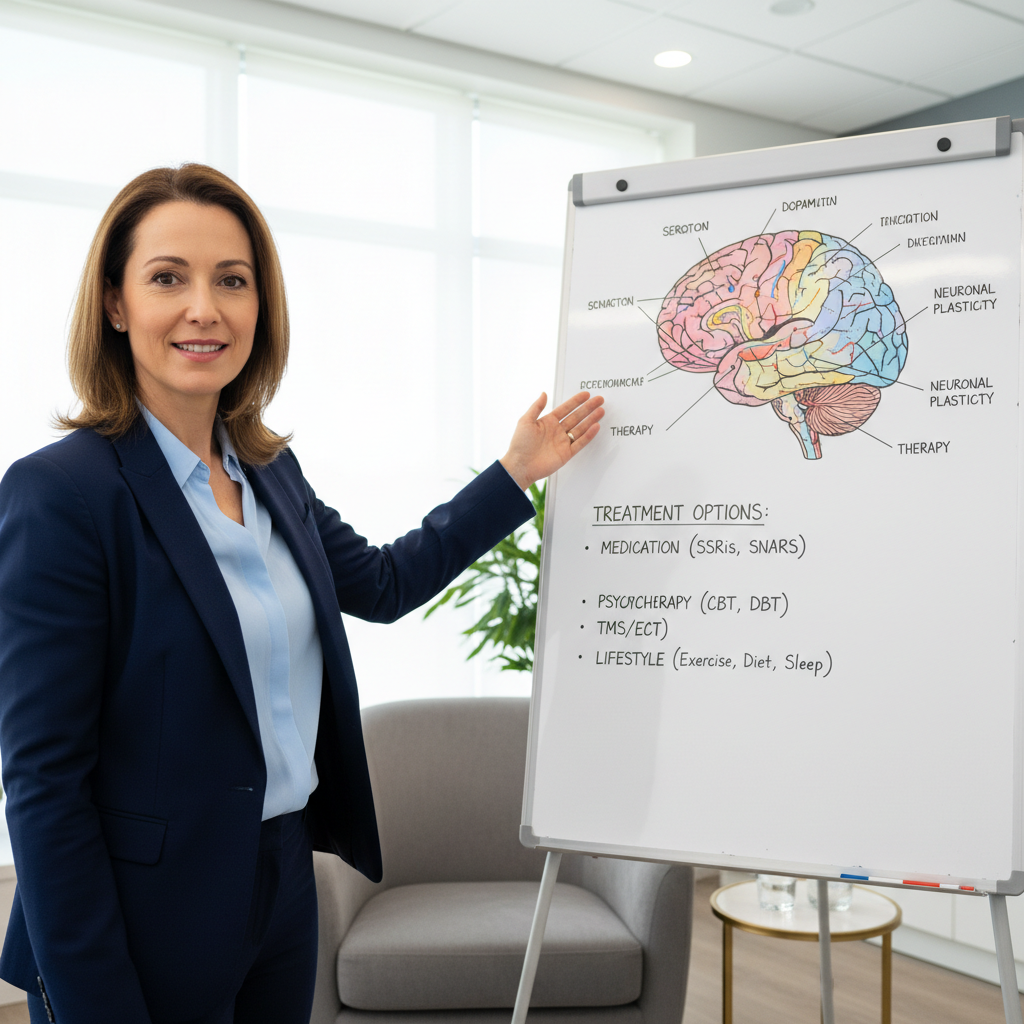
"When I draw the diagram of what's happening in a patient's brain, I watch their shoulders drop. The fear of the unknown is often worse than the diagnosis itself."

Dr. Marcus Chen

Epileptology, Mayo Clinic

Get the Condition Breakdown
3
Step 3

Prepare

Step 3Prepare

Walk into your next appointment ready.

The average neurology appointment is 22 minutes. Patients who arrive prepared — with symptom patterns documented and specific questions written — receive more targeted care and leave with clearer answers.

Appointment Preparation
  • Bring 4 weeks of symptom data — timing, triggers, duration, severity
  • Ask specifically about your subtype (not all MS is the same; not all migraines are the same)
  • Request a written treatment rationale — why this drug, at this dose, for this long
  • Ask what 'treatment success' looks like in measurable terms

"A patient who tracks their symptoms for a month gives me more diagnostic information than three additional tests. It changes everything about how I can help them."

Dr. Priya Nair

Headache Medicine, Cleveland Clinic

Get the Appointment Prep Kit
4
Step 4

Act

Step 4Act

Your personalized readiness checklist.

Knowledge without action stays anxiety. This final step converts everything you've learned into a concrete, condition-specific checklist — what to track, what to ask, what to expect, and what to watch for.

Your Readiness Checklist
  • ✓ Symptom journal set up with your condition's key variables
  • ✓ Three specific questions prepared for your neurologist
  • ✓ Understanding of your treatment's mechanism and timeline
  • ✓ Red flags documented — when to seek immediate care

"The patients who do best are the ones who become experts in their own condition. Not because they're unusual — because they were given the right information."

Dr. James Okafor

Neurodegenerative Disease, UCSF

Get Your Condition Guide
Board-Certified Neurologists

Written by the doctors who treat these conditions daily.

Every guide, every explanation, every physician note on this platform is authored and reviewed by a practicing neurologist with subspecialty training. Not writers. Not AI. Doctors.

12Board-Certified Neurologists
180+Combined Years of Practice
16,000+Patients Collectively Treated
8Major Academic Medical Centers
Dr. Sarah Okonkwo, Movement Disorders Specialist at Johns Hopkins Neurology
Parkinson'sEssential Tremor

Dr. Sarah Okonkwo

Movement Disorders Specialist

Johns Hopkins Neurology

3,200+patients
14years practice

"My patients deserve to understand their own brain. That's not optional — it's part of the treatment."

Dr. Marcus Chen, Epileptologist at Mayo Clinic Neuroscience
EpilepsyFocal Seizures

Dr. Marcus Chen

Epileptologist

Mayo Clinic Neuroscience

4,800+patients
18years practice

"A patient who understands why a seizure happens is a patient who can help prevent the next one."

Dr. Priya Nair, Headache Medicine Specialist at Cleveland Clinic Neurological Institute
Chronic MigraineCluster Headache

Dr. Priya Nair

Headache Medicine Specialist

Cleveland Clinic Neurological Institute

5,100+patients
12years practice

"Migraine is not 'just a headache.' When patients finally hear that from a doctor, something shifts."

Dr. James Okafor, Neurodegenerative Disease Specialist at UCSF Weill Institute for Neurosciences
Multiple SclerosisNeuromyelitis Optica

Dr. James Okafor

Neurodegenerative Disease Specialist

UCSF Weill Institute for Neurosciences

2,900+patients
16years practice

"MS is not a sentence. But it requires a partnership — patient and physician, both fully informed."

Free Condition Guide

Get your personalized condition guide.

A board-certified neurologist has written a plain-language guide for your condition — covering mechanisms, treatment options, what to track, and what questions to ask your doctor.

Your condition explained in plain language (12-page guide)
Symptom tracking template tailored to your condition
Top 10 questions to ask your neurologist
Red flags that require immediate medical attention
Current treatment landscape overview

Lower commitment option

Download the Symptom Journal (PDF)

No email required — opens directly in your browser.

Step 1 of 30% complete

Which condition are you seeking information about?

We'll match you with the right neurologist-authored guide.

Patient Experiences

The moment understanding arrived.

What patients describe isn't just information — it's the relief of finally having a framework for what their body has been doing.

Multiple Sclerosis
"I was diagnosed with MS at 34 and left the neurologist's office with a pamphlet and a follow-up date three months away. Synapse was the first place that actually explained what was happening inside my spinal cord. I cried — not from fear, from relief."

Rachel Morales

Diagnosed with relapsing-remitting MS, 2023

Parkinson's Disease
"My father was diagnosed with Parkinson's and none of us understood what 'dopaminergic pathway degeneration' meant. The guide broke it down in a way that felt like a conversation, not a textbook. We went into his next appointment with actual questions."

David Osei

Caregiver for parent with Parkinson's Disease

Chronic Migraine
"I've had chronic migraines for eleven years. Eleven years of being told to 'reduce stress.' Reading the cortical spreading depression explanation was the first time a mechanism matched my lived experience. I felt seen by a diagram."

Theresa Kim

Chronic migraine patient, 11 years

Epilepsy
"After my son's first seizure, I spent three nights reading everything I could find online — and most of it terrified me. Synapse's epilepsy guide was the first thing that calmed me down by actually explaining what a focal seizure is and isn't."

Marcus Abernathy

Parent of child with focal epilepsy

No spam. Ever.

One guide email. That's the agreement. We've never sold a patient email address.

Medical, not marketing.

No pharmaceutical affiliations. No sponsored content. Guides are written for patients, not industry.

Education, not diagnosis.

Synapse helps you understand your condition — it never replaces your neurologist's clinical judgment.

Ready to finally understand your condition?